Jonas Schwarz · 5 October 2026
Regional Stories Bridge Pikeford Market Traders and Book Club Members Amid Commerce and Environmental Shifts
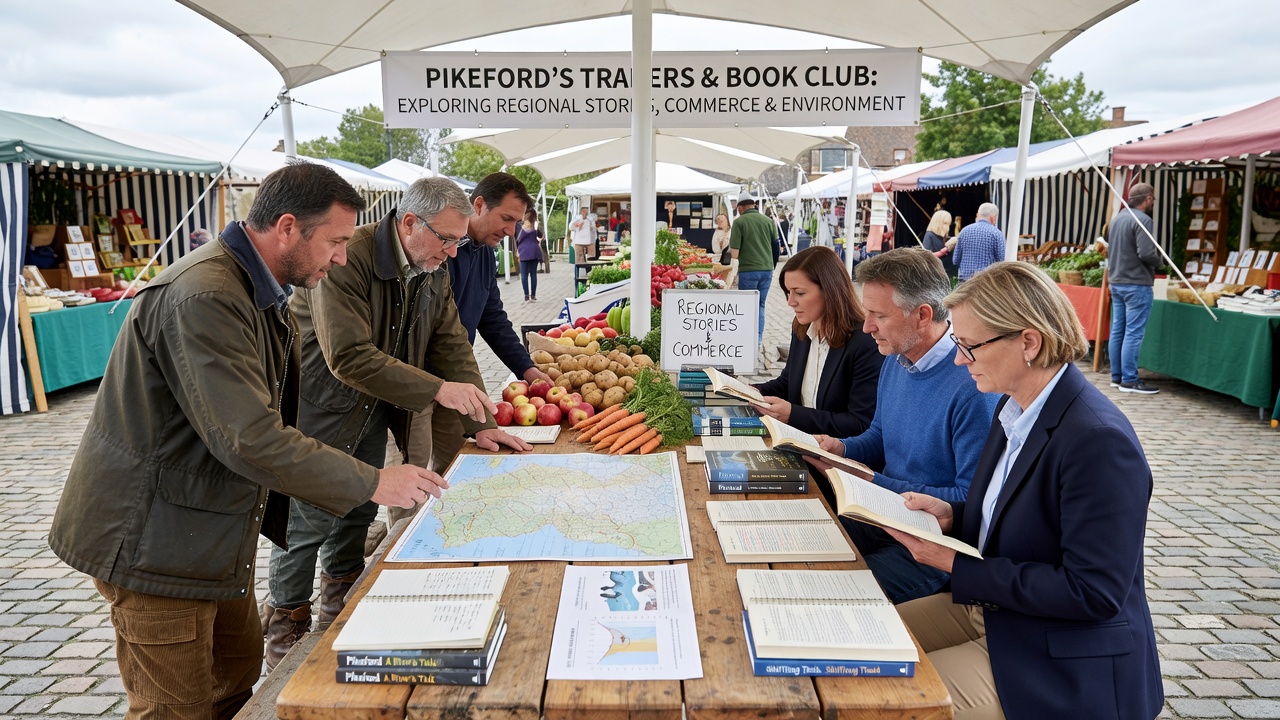
Market traders in Pikeford have long operated stalls that track seasonal goods and daily transactions, while book club members gather to examine narratives drawn from the same countryside, and these two groups have begun sharing platforms where regional tales highlight measurable changes in trade routes and natural resources. Data from local records shows fluctuations in produce volumes at the market coinciding with documented shifts in rainfall patterns and soil conditions across the lowlands, and participants note that stories passed through generations often mirror those quantitative trends without requiring external interpretation.
Shared Platforms Emerge from Routine Gatherings
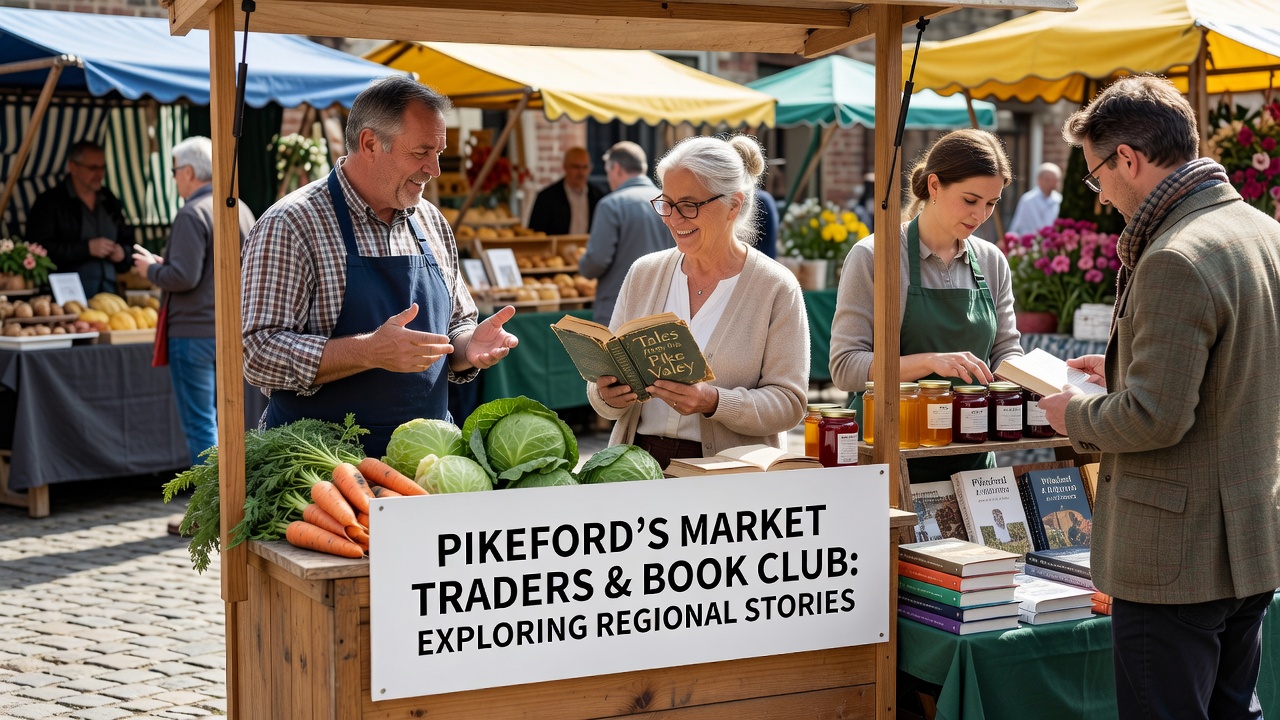
Traders set up displays of root vegetables and handmade preserves each week, and book club sessions occur in adjacent community rooms where readers dissect texts that describe earlier market days, while joint meetings started when several individuals recognized overlapping references to vanished hedgerows and altered supply chains. Attendance logs indicate steady increases in cross-group participation since early planning sessions, and the exchanges focus on specific passages that align with sales ledgers showing reduced volumes of certain crops during drier periods. Observers record that discussions remain anchored in printed accounts and transaction tallies rather than speculation, allowing both traders and readers to cross-reference details such as harvest dates against weather station outputs from the surrounding districts.
Patterns Documented in Local Narratives and Trade Data
Stories collected from Pikeford residents describe periods when river levels supported reliable barge deliveries to the central square, whereas recent entries note shorter navigation windows that coincide with sales records showing greater reliance on road transport for bulk items. Environmental monitoring stations operated by regional authorities have logged incremental rises in average temperatures and corresponding drops in certain wetland plant yields, and these measurements appear in the same volumes that book club members read aloud during sessions attended by traders who supply those plants. Research compiled by university teams in North America and published through academic repositories demonstrates parallel linkages between narrative records and commerce metrics in comparable rural settings, while similar findings from European agricultural agencies reinforce the value of integrating oral histories with quantitative datasets for pattern identification.
One account details how a particular variety of apple once dominated stall space during autumn months, yet ledger entries from the past decade reveal a contraction in that category alongside reduced mentions of the same fruit in contemporary local fiction. Traders supply updated inventory sheets that book club members incorporate into reading lists, and this exchange produces annotated timelines that map story events against monthly revenue summaries. The process continues without external facilitation, as participants maintain their own archives of photocopied pages and photocopied receipts that illustrate the convergence of literary description and commercial activity.
October 2026 Sessions Expand Documentation Efforts
Scheduled gatherings in October 2026 will incorporate new weather summaries released by the Australian Bureau of Agricultural and Resource Economics and Sciences, which detail comparable drought cycles affecting produce availability in analogous climates, and Pikeford participants plan to align those figures with entries from their own market registers. Book club selections for that month include recently reprinted collections of regional short fiction that reference earlier flood events, while traders prepare visual boards displaying year-over-year changes in stall occupancy rates. These combined materials allow direct comparison of textual references to water levels against instrument readings collected at fixed points along the local waterways, and session facilitators rotate among volunteers who ensure each contribution receives equal attention.
Additional materials drawn from Statistics Canada reports on rural retail patterns provide further benchmarks for measuring shifts in vendor numbers and product diversity, and the data sets integrate smoothly with existing Pikeford archives because both emphasize observable counts rather than projections. Participants compile side-by-side charts that place story excerpts next to corresponding trade statistics, and the resulting documents remain available for subsequent meetings without alteration. The approach keeps focus on verifiable intersections between narrative content and commercial records, extending the same method used in prior months.
Conclusion
Continued collaboration between Pikeford market traders and book club members produces accumulating records that connect regional stories to measurable adjustments in local commerce and environmental indicators, and the October 2026 sessions will add further layers to those archives through incorporation of external data sets from varied geographic sources. The method relies on direct alignment of textual passages with transaction figures and monitoring outputs, sustaining an ongoing exchange grounded in shared documentation rather than separate activities.